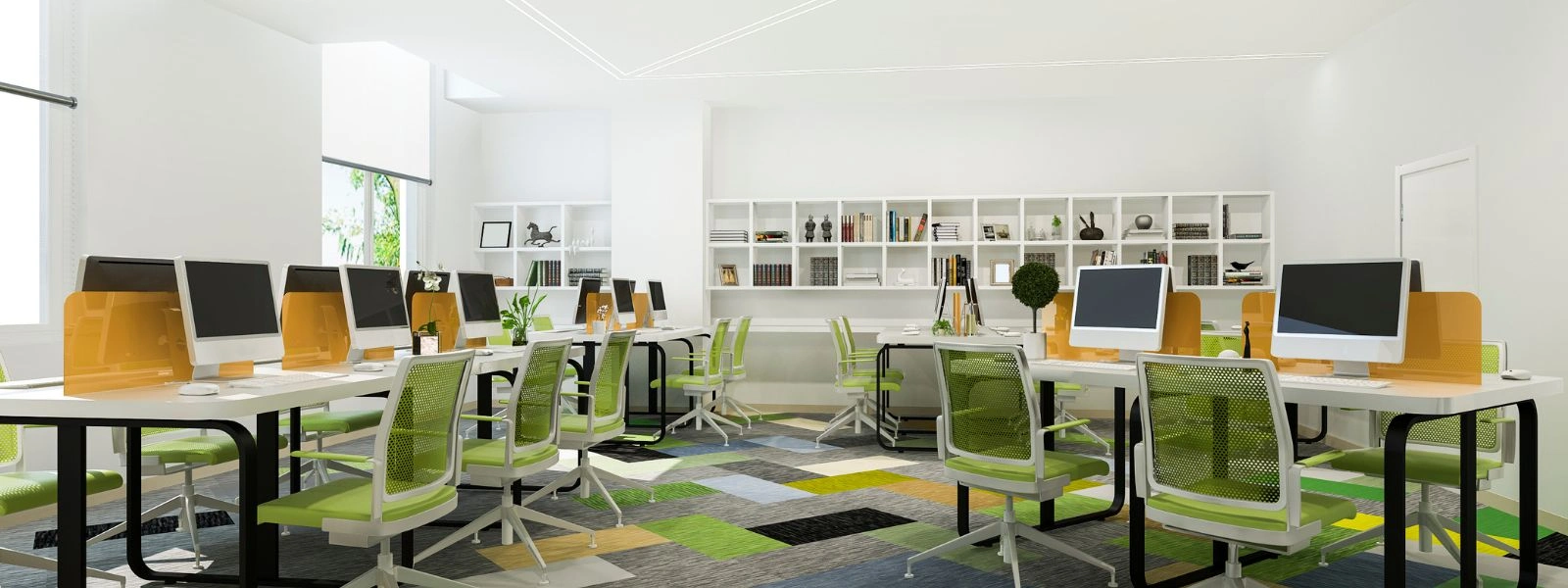
Modern employees do not always work in the same way. Some tasks need quiet and focus, while others work better with teamwork, discussion, or movement.
This is where activity-based working comes in. Instead of giving every employee the same desk and workspace, an activity-based office provides different areas for different types of work.
An employee might use a quiet desk for focused work in the morning, move to a meeting area for a team session, and use a lounge space for an informal discussion later in the day.
For businesses in Cyprus and beyond, this approach can help create offices that are more flexible, comfortable, and ready for changing work habits.
Τι περιλαμβάνεται σε αυτό το άρθρο
- What activity-based working means
- Why offices need different work settings
- The main zones in an activity-based workplace
- Furniture needed for flexible working
- The role of technology
- Benefits of activity-based working
- Practical office design tips
- Frequently asked questions
What Is Activity-Based Working?
Activity-based working (ABW) is an office design approach that gives employees a choice of workspaces based on the task they are doing.
Instead of assigning one fixed desk to every employee, the office includes different spaces for different activities.
For example, an office may have:
- Individual workstations
- Quiet areas
- Meeting rooms
- Collaboration spaces
- Lounge areas
- Phone booths
- Breakout spaces
The idea is simple: the workspace should match the work.
How Activity-Based Working Differs from Traditional Offices
Traditional offices often give employees one permanent desk. The layout may stay the same even when the type of work changes.
Activity-based working takes a more flexible approach.
An employee does not have to complete every task at the same desk. They can choose a space that suits their current activity.
This can be useful for businesses with hybrid teams, shared workspaces, and employees who move between individual and group tasks throughout the day.
Why Offices Need to Support Different Work Styles
People have different working preferences, and even the same employee may need different environments during the day.
Focused tasks may require a quiet space with few distractions. A brainstorming session may need a large table where people can share ideas. A video call may require privacy and good acoustics.
A well-designed office should support these different needs.
Instead of asking employees to adapt to one fixed environment, activity-based working gives them more choice.
This can also help businesses make better use of office space. Areas can serve different purposes throughout the day instead of remaining empty when they are not being used for their original purpose.
The Main Zones in an Activity-Based Workplace
An activity-based office should include a mix of spaces. The exact combination will depend on the size of the office, the number of employees, and the type of work they do.
Focus Areas for Individual Work
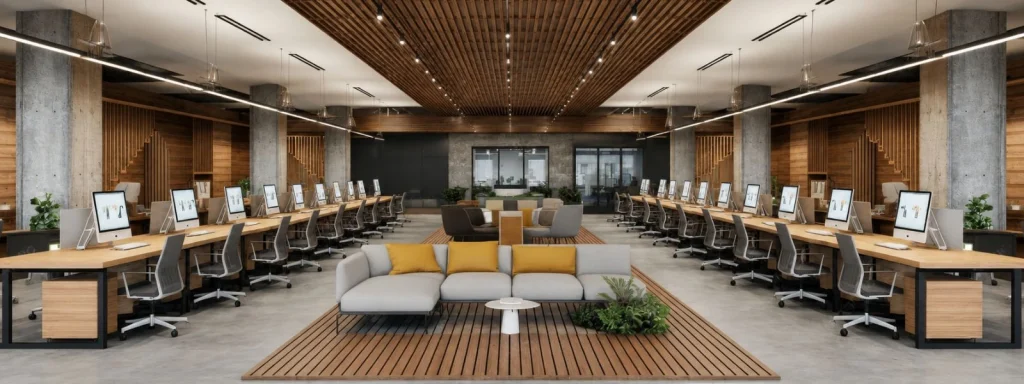
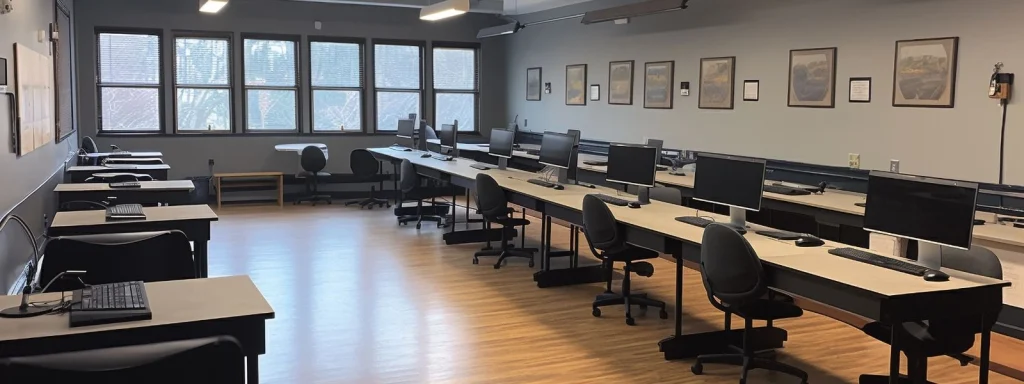
Focus areas are designed for tasks that require concentration. These spaces can include individual workstations, private desks, or quiet zones with acoustic screens.
The furniture should provide good ergonomic support, while the layout should limit unnecessary noise and interruptions.
Collaboration and Meeting Areas
Teams need spaces where they can discuss projects, solve problems, and share ideas.
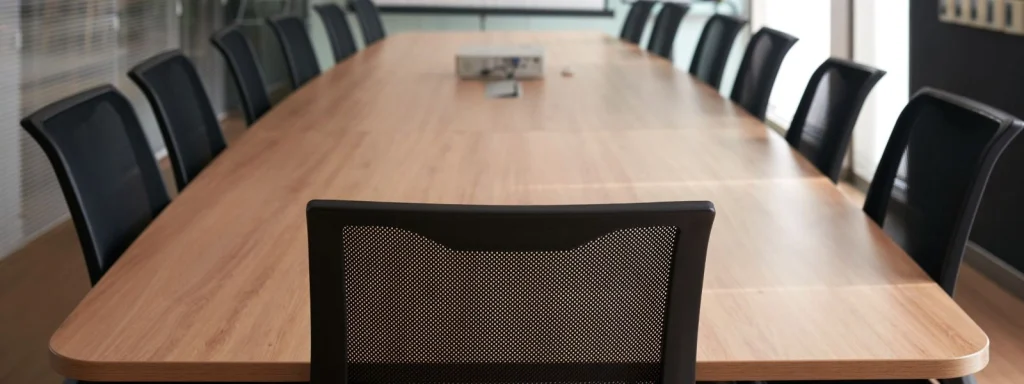
Meeting tables, comfortable chairs, whiteboards, and technology-ready furniture can create effective collaboration areas.
Not every discussion needs a large boardroom. Small meeting tables and informal seating can be useful for quick conversations and smaller teams.
Quiet and Private Spaces
Open offices can become busy and noisy. Quiet rooms and acoustic work pods provide an alternative for employees who need privacy.
These spaces are useful for:
- Phone calls
- Video meetings
- One-to-one discussions
- Εστιασμένη εργασία
- Confidential conversations
Social and Breakout Areas
Not all work needs to happen at a desk.
Lounge seating, sofas, coffee tables, and informal meeting areas can support casual discussions and short breaks.
These spaces can also help employees move away from their main workstation and interact with colleagues in a more relaxed setting.
Choosing the Right Furniture for Activity-Based Working
Furniture is one of the most important parts of an activity-based workplace. It needs to be flexible enough to support different activities while remaining comfortable and durable.
Flexible Desks and Workstations
Desks should support different working positions and office layouts. Mobile desks and modular workstations can be moved when teams or room requirements change.
Adjustable desks can also provide greater flexibility by allowing employees to alternate between sitting and standing.
Ergonomic Office Chairs
A flexible office still needs comfortable seating. Ergonomic office chairs should provide proper support and allow users to adjust the chair to suit their body.
For shared workspaces, adjustable chairs are especially useful because different employees may use the same workstation.
Modular and Mobile Furniture
Modular furniture makes it easier to change an office layout. Mobile tables, storage units, desks, and seating can be moved to create new arrangements for meetings, training, teamwork, or individual work.
This reduces the need for major changes when the business grows or working styles change.
Acoustic Furniture and Partitions
Noise control is important in activity-based offices. Acoustic screens, high-back seating, partitions, and work pods can help separate noisy activities from areas used for focused work.
This creates a better balance between open collaboration and quiet concentration.
How Technology Supports Activity-Based Working
Technology is an important part of a modern flexible office.
Employees need easy access to power, internet connections, displays, and video conferencing tools as they move between workspaces.
Technology-ready furniture can include built-in power outlets, USB charging points, cable management, and connectivity features.
Meeting areas should also support both in-person and remote participants. This is particularly important for businesses with hybrid teams.
The goal is to make technology easy to use without allowing cables and equipment to create clutter.
Benefits of Activity-Based Working
When planned properly, activity-based working can offer several benefits for businesses and employees.
Greater Flexibility
Employees can choose spaces based on the task they need to complete. This makes the office more adaptable throughout the day.
Better Collaboration
Dedicated collaboration areas make it easier for teams to meet and exchange ideas without disturbing employees working in quieter areas.
Improved Use of Office Space
A flexible office can support more activities within the same area. One space might be used for focused work at one time and collaboration later.
This can help businesses make better use of their available floor space.
How to Design an Activity-Based Office
Creating an activity-based office requires more than buying different types of furniture. The space should be planned around how employees actually work.
Understand How Employees Work
Start by looking at daily work patterns.
Consider:
- How many employees work in the office each day?
- How often do teams meet?
- Which tasks require privacy?
- How much individual work is carried out?
- Which areas are currently underused?
These answers can help determine which types of spaces are needed.
Balance Open and Private Spaces
An effective activity-based workplace should not be completely open or completely enclosed. Instead, create a balance. Open areas can support communication and teamwork, while private spaces provide quiet areas for focused work and calls.
Make the Space Easy to Change
Workplaces continue to evolve. New employees may join, teams may change, and businesses may introduce new working methods. Choose modular furniture, mobile tables, movable partitions, and flexible seating that can be rearranged when needed.
This helps future-proof the office without requiring a complete redesign.
Συχνές ερωτήσεις
What is activity-based working?
Activity-based working is an office design approach that provides different workspaces for different tasks. Employees can choose where to work based on whether they need to focus, collaborate, meet, or make calls.
What furniture is needed for activity-based working?
Common options include ergonomic office chairs, modular desks, mobile tables, meeting furniture, acoustic partitions, work pods, lounge seating, and flexible storage.
Is activity-based working suitable for small offices?
Yes. Small offices can also use activity-based principles. The key is to make each area serve more than one purpose. Flexible furniture can help a small space support meetings, individual work, and collaboration.
How does activity-based working support hybrid employees?
Activity-based working gives hybrid employees access to different work settings when they come into the office. Shared workstations, meeting areas, private rooms, and collaboration spaces can support different activities without requiring every employee to have a permanent desk.
Συμπέρασμα
The rise of activity-based working reflects a major change in how modern offices are used. Employees no longer need to complete every task from the same desk.
A well-designed activity-based office provides different spaces for focus, collaboration, meetings, calls, and informal work. The right furniture makes these spaces flexible and comfortable while helping businesses make better use of their available space.
For companies planning a new office or updating an existing one, the goal should be simple: create a workspace that supports the way people actually work.
With flexible furniture, good acoustics, smart technology, and thoughtful space planning, businesses can create offices that are ready for today’s needs and tomorrow’s changes.
Βασικά συμπεράσματα
- Activity-based working gives employees different spaces for different tasks.
- Offices should include a mix of focused, collaborative, private, and social areas.
- Ergonomic chairs and flexible desks support employee comfort.
- Modular and mobile furniture makes office layouts easier to change.
- Acoustic solutions help balance collaboration with focused work.
- Technology-ready furniture supports modern and hybrid teams.
- Good planning helps businesses make better use of office space.
- Flexible office design can adapt as business needs change.